Michigan State University Athletics
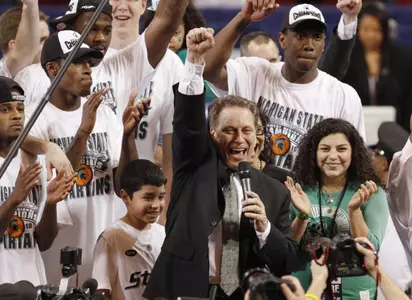
Final Four Teleconference: Coach Izzo & Coach Stevens Quotes
3/29/2010 12:00:00 AM | Men's Basketball
March 29, 2010
MODERATOR: Welcome, everyone, to this afternoon's teleconference featuring the four head coaches of our Final Four teams that have advanced to Indianapolis and will play Saturday starting at 6:07 Eastern Time with Butler taking on Michigan State followed by Duke playing West Virginia.
We'll go right into our calls. Today we first start with Brad Stevens of Butler University. First of all, Coach Stevens, congratulations on a great run through the tournament so far. We appreciate you taking the time to take calls right now. We'll take our first question for Coach Stevens.
Q. The three sophomores in your starting lineup weren't necessarily highly touted prospects during the recruiting prospect. What did you see in them?
COACH STEVENS: You know what, I saw them all at different times. I saw Gordon during his junior year some when I was an assistant. He was the first kid that actually visited campus when I was the head coach, when I was named the head coach. We recruited him really hard for the next couple months. He decided to come to Butler.
What you see in him is what you're seeing now. I was blown away with him. And what really stuck out to our staff was no matter what he did in high school, it looked like it would translate right to the college level. He could pass it, shoot it, make the right decisions, he's tough, and he rebounds. That was fairly obvious from the get go.
Shelvin I got chance to see some that summer and really watched him throughout the fall and into the early part of his senior season. I just loved the way that he played. I felt like he could not only put the ball on the floor, but shoot the ball as you've seen. Always makes good decisions.
If you talk to either of those guys, the people around the school, everyone loved them, every single person that came across those guys loved them as a person first and foremost. That means a lot.
Ron's recruitment was unique. I watched him play the summer before. Probably didn't realize that we were going to recruit that position for the following year. So he signed with Western Kentucky. When he was released by Western Kentucky, he actually called us. So, you know, it was one of those things, that was more fortunate than anything else. But same thing. Loved the way he played, loved all the things he could do. Character certainly stands out above all else.
Q. Could you retrace briefly your decision way back when to leave the business world and go into basketball.
COACH STEVENS: Well, now it looks like a great idea. At the time I just thought it was something that I really wanted to try, really wanted to do. I was really fortunate at 22 or 23 years old not to have any responsibility beyond myself. I didn't have a family. I wasn't married up to that point. My long time girlfriend at the time and I both decided to kind of chase that dream.
We ended up getting married her second year of law school. She moved to Cleveland, went to law school, lived at home for two of the last few years of her mom's life while she was the battling cancer. It has really worked out well for us in a lot of ways. We're incredibly blessed because of that.
Q. What was it like going back to Indianapolis, just the response from fans and supporters?
COACH STEVENS: You know, it was unbelievable. I was here in 2003, we went to the Sweet 16, and when we got back, it was packed. It was about triple that at 3 a.m. on Saturday. So it was certainly special. It was interesting because comparing the first time we came back from the Sweet 16 to the third time, it wasn't quite the same. But that probably is an indicator that there's a sign of growth in the program.
But I think everybody recognizes how big of a deal this is. And most importantly, it's a big deal for our school. My job is to help Butler, to promote Butler in a positive way. Our guys are doing my job for me.
Q. Kind of going back on how you decided to get into the business. When you get into it at age 23, do you set any timelines on how long you're going to give yourself to try to make a big step up? And when in your life as a player or as a kid did you realize that coaching was for you?
COACH STEVENS: I started to think about coaching when I was a senior in college, ironically not too long after I accepted the job as a marketing associate at Lilly the following year.
To answer your first question, I think that more than anything, I was told by a person at Lilly early on in my time that the secret is just do your job to the best of your ability and don't worry about anything else. That's what I've tried to do. So I've never put a timeline on anything. It's always just been about trying to do whatever job I'm assigned well.
Q. What did you pick up from your father? He said he took you to IU games as a youngster. How much of an impact did that have on you? How much did you learn from (Todd) Lickliter to get to this position?
COACH STEVENS: First of all, absolutely I wouldn't be here without Thad Motta and Todd Lickliter, and not just here in this spot, but also I wouldn't be able to do what we're doing.
Like I said the other day, this is not about me. This is not about our staff, although they have done an unbelievable job. They all deserve their own opportunity to run a team at some point soon. I hope they get those opportunities if that's what they want.
But I think this is about the 10 years and the 15 years of people that have poured sweat into this. It's been great to get emails and texts from all the former coaches and players who came really close and how much they care about this. To me, that's been the most fulfilling part of it.
Again, I can't overstate what Todd has done for me, what Thad has done for me, not only me, but Butler. They're every bit as big a part of this as I am, if not bigger.
Q. Also your father early on, did he instill the love of sports more than anything else?
COACH STEVENS: My dad played football at IU for John Pont. (He) was a registered freshman on their only Rose Bowl team. I think more than anything, I just loved the game of basketball. It was kind of unique. I never played football. He never really steered me in that direction. My parents, whatever I liked to do, they supported me.
Basketball was always my first love. It's hard not to be when you're a kid growing up in Indiana in the '80s and '90s, because basketball in this state was pretty darn good at that time.
Q. You mentioned in Salt Lake your kids would go to class. What is that schedule this week?
COACH STEVENS: We obviously will do everything mandated by the NCAA. So we won't be in class some of the time on Thursday. We're going to have to figure out if we're going to stay downtown on Thursday and Friday. Obviously, campus is a live environment right now, which is a great thing. Anytime that we can, we will be shuttling our guys back and forth to classes on Thursday and Friday. But they'll be in class all the way up until that time.
Q. What do you think your life would have been like if you didn't take a shot at coaching? If you could have lived with that regret, knowing you didn't take the shot?
COACH STEVENS: If everything else remained the same, I would have been as happy as heck. I have a wonderful wife, great kids, tons of friends in Indianapolis that I've grown up with in high school and went to college with. You know, it's not like life was bad. It was just one of those things you wanted to take a shot and see what happens.
But I think now as I've grown older, I appreciate what I had at Lilly even more than I did then. So I'd be perfectly content. Friends and family and faith, they're going to take the cake over all this stuff.
Q. I wanted to go back to the scheduling question for the week. Given you're running into family and friends you never knew you had, how difficult is it going to be for you to keep a normal schedule this week basketball and class wise? Have you turned to any older coach that might have gone through it for any advice?
COACH STEVENS: I've obviously picked Thad's brain because he's been through it a little bit. Obviously, nobody, since 1972, has been through it in your hometown. It's a little bit different.
But I thought that it was going to be pretty normal until I watched some film at home this morning, then tried to sneak in the back door at Hinkle. I walked in. The lines were all the way around the building to get tickets, or be in line to just get a chance to get tickets.
Obviously it is unique. Campus is a buzz. I think that will settle down once ticket sales are done and we'll go from there.
I told our guys, and myself included, we're not going to focus on tickets or anything else after Monday. It's Michigan State that's a daunting enough task.
Q. For people who haven't been to your campus, how much of a hold do you have on the City of Indianapolis the last couple years? Are you considered the city's team now or do you still fight Indiana and Purdue for interest? How much of an advantage is that going to be for you?
COACH STEVENS: I hope we can continue to raise our attendance and raise everything else. We haven't sold out very often. That's just being honest. We have unbelievable fan support. Our people here that have been coming and that have really joined on have just been terrific. Even when it's not sold out, it is a loud, lively environment.
Hopefully this run helps continue to spear that to the direction where it is that atmosphere every single game. But certainly there are a lot of IU fans, Purdue fans, fans all across the Big Ten, Midwest. Just like me, I'm a huge Pacers and Colts fan, too.
Our fans that we do have, have been terrific. And hopefully we can raise our average numbers by quite a bit. If this run helps us do that, that's a good thing.
Q. Do you think Michigan State had a big advantage playing in Detroit last year?
COACH STEVENS: No, no. It's the same thing this year. Everybody is talking about us playing at home. Michigan State won a Final Four in Indianapolis in 2000. They won the regional here last year in Lucas Oil where we're playing. They're going to have plenty of fans. This is Butler country, but it's also Big Ten country. It's not like it's going to be an all Butler crowd on Saturday.
Q. You played terrific defense in Salt Lake. Would you comment on the importance of defense for all four teams.
COACH STEVENS: Well, you know, the old adage that defense wins championships, it will be the case for somebody. I think we didn't perform at the level that we needed to perform to defensively in the early part of the season. We lost some games because of that.
One of the things that I really believe about watching these tournaments, your margin for error decreases, there's no question about it as you play better teams. But nobody's playing perfect. Nobody's even coming close to playing perfect. But the team that sticks to their plan, that does what they do as well as they can for 40 minutes has a great chance of winning. That doesn't mean you're always going to win, but you're in the position to win.
I think Michigan State is just an unbelievable example of that. As I've gotten a chance to watch them more from a strategic and analytical point of view over the last 24 hours, they're a joy to watch as a coach and a bear to prepare for.
Q. I wanted to know, what is your opinion that makes Hinkle Field House a special place? How do recruits respond and realize that's where they're going to play college ball?
COACH STEVENS: I don't think you can generalize it. I think the people that appreciate tradition and history love it. If you're looking for new amenities and flashy things, you know, something that everybody's trying to build to keep up with the Jonses, I think you got to go somewhere else.
The good news is the people that usually decide to visit here or have an interest in Butler usually are the former, they really like the place, they really appreciate it. Those things are not going to matter in their final decision.
Q. You mentioned when you returned to the campus there was triple the people. Was that the airport?
COACH STEVENS: No, it was on campus. We returned to campus at 3 a.m. Hinkle Field House in front of all four gates was lined up five rows, 10 rows deep with students, fans and everybody else.
Q. How surprised were you?
COACH STEVENS: Well, I heard it was coming. You know, just still it's overwhelming. It's not overwhelming because of the number of people; it's because of how much they care about these guys and this team. Again, my job is to help promote Butler well. To see the excitement that our players were able to bring to some people this weekend, it's obviously a neat thing.
Q. I've seen your team play quite a bit in the Horizon League. I was struck despite your great defense and big wins, seems like you could have been playing better offensively and that you weren't making a lot of the shots that you guys have made when you're hot. What do you think about that?
COACH STEVENS: I think that has a lot to do with who you're playing. The other team is trying to guard you when you're getting those shots. When you're playing great teams and athletes like Syracuse and Kansas State had, those shots are a lot tougher than they are even when you're playing a guy that's two inches shorter than that and a lot less athletic.
Q. Did you deviate much when you took over the program from Thad and Todd? Could you give us one or two traits that when you go out recruiting you have to see in a player to continue recruiting?
COACH STEVENS: Well, first of all, the traits, we're going to do our homework with regard to what people in their community and school think about them. So that's a huge part. Then obviously not only being degree seeking, but an ambitious student. If they're a student that wants to compete in the classroom is a critical, critical component of our recruiting. Then there's a minimum level of athletic ability and basketball ability that you have to have to be considered for a scholarship at this level.
Q. Did you deviate much in your program from what Thad and Todd did there?
COACH STEVENS: I think the further you go along, the more deviation there is just because I deviated very little, especially with that first team. We had five seniors returning. They believed in what we were doing. Again, we haven't deviated a whole lot from that.
But you do have to make tweaks and be creative with your personnel. Our staff has done a great job of that. You know, again, what we're trying to do, and I think what we are at our core and foundation, has not deviated at all. But obviously when you get on the basketball court, it's sometimes dependent on who you have on your team.
MODERATOR: Coach Stevens, thank you so much for your time today. We'll see you in a couple days.
COACH STEVENS: Thank you, David.
MODERATOR: We have Coach Izzo on the line. Coach, congratulations on advancing to your sixth Final Four in the last 12 years. A remarkable accomplishment. Appreciate you taking the time out of your schedule today to take calls from the media.
COACH IZZO: I appreciate that. I'm looking forward to the questions.
MODERATOR: We'll jump right into the first question.
Q. Tom, I guess 33 years old you were an assistant. Can you talk about the job Brad Stevens has done at such a young age and what you've seen from his team?
COACH IZZO: I've been very impressed with Brad, with his team, how he's handled everything. Seems like a very humble guy, blue collar guy with maybe a white collar way of putting it. He's very articulate, to the point. He seems to have a great handle on it.
Normally I'd say last year it was a little hard handling all the distractions of being close to home. I said right off the bat after we won yesterday that when I was asked whether I thought that would bother Butler, I said, No, because of the demeanor of their coach. The way their team is, I think they'll use it fine, use it to an advantage instead of a disadvantage.
Q. The talk about Oregon. I know you're preparing for the Final Four. Have you been contacted, what your thoughts are on that?
COACH IZZO: No, you know, I haven't been contacted. You know, the truth of the matter is, you know it, whenever you have some success, thank God I've had some, you get to be one of 10 names that pops up on different things.
No, I haven't. I'm not sure where that came out of. Probably won't comment on it anymore because I got a job to do. I'm happy with the job I have. It doesn't come at a better time of year than March. I'm looking forward to this Final Four.
Q. I haven't done a huge breakdown, but I haven't noticed quite the Hansbrough superstar type in this Final Four. You have obviously had to kind of cobble things together with injuries. What do you think about the nature of the four teams left? Seems like it's a team effort instead of one or two guys.
COACH IZZO: I think that's true. I mean, I think West Virginia has a key player or two. And definitely Duke, you know, over time, (Jon) Scheyer has been there four years, done it year in and year out. You look at (Gordon) Hayward. You can find pros, potential pros, on every team.
But the megastar that maybe you normally seem to find in these Final Fours maybe isn't there. I think it's refreshing that you're looking at four teams that 'team' is maybe the most important thing.
I think it's going to make for a good Final Four in a different way. I think people, it might be refreshing and enjoyable to watch teams that are going to have to rely on each other to advance a little bit more than maybe one person.
Q. Michigan has had a lot of great coaches. Where would you put yourself in terms of historically in ranking the great coaches?
COACH IZZO: I mean, I think we've had good success during the years. I think we've just been fortunate on these Final Fours. Yeah, you got to be good, you got to be lucky, we've been a little bit of both. Sometimes they've come - like the year after we went to the first one, it seemed like we should have got back to the next one, and we did. Then there's years like 2005, or maybe this year where you say, Where did it come from?
You know, what I respect about Jud, Bo, those different coaches that you're talking about, the way I'd like to be linked with them, they did it the right way, with class, humility, and hopefully their players were the same way.
Rankings are wins and losses, all those things. I look at it more like all the things we've done, your players are graduating, we're trying to make them better people. There's always going to be some problems and mistakes, this and that. But that's what I got following those two guys, and then winning.
I think Jud withstood the test of time for 15 years. And Bo was unbelievable, what he did there, winning year in and year out. That's kind of what I respect.
Instead of ranking, I'd rather be grouped in to say we're doing it the right way, the way some of the great coaches before me in either sport have done it here in the state of Michigan.
Q. Do you see yourself in that class of a Bo, of a Jud?
COACH IZZO: No, no, no. I don't yet. But I never did and I don't yet. But I think that's what the future brings. If you keep winning, keep doing it the right way, in the end, it all takes care of itself, what should happen, if you've accomplished things. Getting there is one thing, maintaining is another. We've maintained for a while. Got some years left. I think that is something that is judged at the end or should be judged at the end. That's what retirement is for.
Q. You alluded earlier that Butler would be home. What were your expectations last year going into the Final Four in Detroit? Was there anything you didn't expect? If you had to do it over again, would there be anything you changed?
COACH IZZO: You know, I'll be honest with you, I thought our kids handled the trip there about as good as you can handle it. I don't know, I haven't looked up, it's one thing being the home state or hometown team, it's another thing if your players are all from that area. The one thing we had, everybody on our roster, but one or two guys, were from a three hour radius and a lot of them, of course, from the state of Michigan. That means more relatives, cousins, friends. I thought our guys handled it great.
A lot of people said, Are the distractions what got you against North Carolina? I say, no, the talent is what got us against North Carolina. They were just better than we were.
Going in, I wouldn't have changed many things. Went down on a Wednesday. We have a little team time together. I think what's going to be good about this Final Four, they've changed the format a little bit as far as you get more opportunities to be downtown, which I think is good. Some people want to be far away. I think the players should enjoy some of the falderal of what goes on at a Final Four. If you can't handle that, you're probably not the right team to have a chance to win.
Q. How much of an advantage did you get from the home crowd from the Final Four especially against Connecticut?
COACH IZZO: Against Connecticut, I think it really worked to our advantage, it really did. There's nothing like walking out there, having 40,000 people pulling for you in the venues like the ones we play in now. In Indianapolis, it's a beautiful venue. We played in there last year.
I think, unless you can't handle the distractions, it's definitely a plus. And yet, like everything else they say in sports, after the opening tip, you play a couple minutes, usually the best team still wins.
In basketball, compared to almost any other sport, I think the crowd can make the biggest difference because it's so close, it's so right there.
So, you know, if it's handled right, and I'm sure it will be, it's definitely going to be worth something to them, and it's going to be their form. I just look at it like we dealt with it one way, which helped us. We watched North Carolina just take our heart out, take the crowd right out of the game. Then we've also gone and played in Indianapolis against Louisville last year in the Elite 8 when they had 30,000 Louisville fans and found a way to win.
I think we have enough experience each way. I think what it comes down to is who plays the best.
Q. Coach Stevens says it's Big Ten country and he thinks there will be a lot of Michigan State fans there. Do you agree with that?
COACH IZZO: I do agree with that. I think, number one, because we do travel pretty well. It's a three and a half, four hour ride. There will be a lot of people coming down. Getting tickets will be the issue. Number two, it is Big Ten country. Thank God we're very, I think, favorable with Indiana and Purdue. Those fans have always been good to me. I think, you know, hopefully we'll embrace the conference.
But there's no question that, hey, listen, this is a special story for Butler and deservedly so. It's not out the clouds because they were picked in the top 10 all year. I mean, if I wasn't playing them, I definitely would be a fan, I can promise you that.
Q. The term 'mid-major' used to carry more meaning it seems like. Maybe now it doesn't so much with Butler and George Mason and Gonzaga. Can you express what's happened there along the way?
COACH IZZO: Don't forget Northern Iowa since we blew them out by one or two. Those teams are good, they're really good. I think there's a couple of reasons. Number one is the parity is more. Number two, when they cut the scholarships, a lot of players that would have gone to some of those other schools, are going to East. Number three, I just think there's better players out there and people are putting more money in and things like that, and they're playing against the higher echelon teams, these preseason tournaments and games. They're realizing that they can play with them.
The problem when it was home and home, no big schools would go to those schools, so they either played them in a tournament once every four years or they played you on your home court. Now I think these preseason tournaments, they're getting a shot. Gonzaga has done an incredible job of scheduling teams like that. They're just better. They're well coached.
The last thing, they got a lot of four and five year players on a lot of these teams. I think some of the, let's say, the six top conferences are losing players to the NBA and for the most part these guys are keeping them and that, too, makes a difference.
Q. Obviously a lot is being made about six Final Fours. In the moment, can you consider what you've done going to six Final Fours in 12 years?
COACH IZZO: You know, I don't want to sound like the most humility driven guy in America, but I don't. I don't think you do because you never look at things the same from the inside out as you look at them from the outside in. At this time of year, of course, you don't get a chance to sit down and think about it. That's not what this time of year is for. I'm not even sure the offseason is for that. I think that's the retirement season. I'm not near that.
No, I haven't. And yet I appreciate each one. I guess I always think about Gene Keady at this time of year. I think he was one of the greatest coaches I've ever gone against, watched coach since I was an assistant for a long time with Jud. He never went to one. I don't think you should be evaluated on Final Fours because I still put him in the top echelon of coaches that I know.
I think how lucky I am that I have had a chance to go to some; some of the great ones haven't had a chance to go to any. I've appreciated it. But I haven't really looked at it to say, Wow, I get to do that in 15 years or so.
Q. Some would maybe think this would be the hardest one to get to. Was there a part of the season that was most difficult, early February or preconference, something like that?
COACH IZZO: Well, I think at the start of the year, it was a little hard because we were picked so high and we lost four good players, two starters. The two starters were the best defensive players in the league, the MVP of the elite, Sutton, Walton. That made it difficult.
We played a difficult schedule, especially playing North Carolina and Texas on the road. We played Gonzaga and Florida. We played a difficult schedule. The league I thought was better. Then we had the injury bug. It wasn't major. But the three games that Kalin was out, he was actually out for two full games, but then he wasn't healthy for another week, and we lost some games in that period. Our schedule got tougher. We might have lost them with Kalin.
It was just adjusting to all those things. At the end, it was Kalin and Chris Allen and Delvon Roe hasn't been healthy all year, but just sucked it up and played. That part of it has been a little more unnerving than some Final Four runs.
I think it's made it more satisfying, too. I think it's what I look at it now and say, Wow, our guys did what we've asked them to do, they've handled adversity, sucked it up, toughed it out and, Shazam, we're heading to Indy, and that's awesome.
Q. I wanted to ask you about Indianapolis. The feelings you get going back there, Michigan State has had a great run there. When you hear Indianapolis in the NCAA Tournament, does that conjure up a very good vibe?
COACH IZZO: Magic brought that up to me yesterday. I don't know if it's good or bad, but I don't think we've lost in Indy in the NCAA Tournament. That was his '79 team, and then of course 2009. You know, unfortunately, I don't think that's why you win, although last year when we were playing, they had torn down the dome we won it in, I know I went over and got a piece of that dome. There were some rocks on the floor that I saved to remember.
But, you know, I like Indy. It's Big Ten country. It's not too far. It's a good atmosphere for a Final Four since you have pretty good access downtown, the arena, the stadium is so close. I just think it's a great setting and it's been good to us.
But unfortunately now we play a team that's the hometown team and maybe the darlings of the tournament in a way. So we're just going to have to try to overcome that and see how we can play.
Q. Six Final Fours in 12 years, theoretically what you've been able to do there, what Coach Krzyzewski has done at Duke should be incredibly difficult, if not impossible, because of all we've seen with the parity, the expansion of the tournament back in '85. Do you have any idea how you or Coach Krzyzewski or both of you have been able to continually make it back to the Final Four and sustain the excellence over such a long period of time?
COACH IZZO: To me, it's easier for me than it was him because I've had someone to look at and how he's done it, read his books and watched him. He's just done an incredible job there. I think what's most incredible is he's done it in recruiting, he's done it on the court, he's done it in the classroom, he's done it with class. He's done it over time.
We're starting to get to the point where we're doing it over time. I can only say that I feel very fortunate and lucky that we've gone to the six. Some of it's been with good teams. Some of it's we've gotten lucky in the tournament. I think all in all, you know, for me, I've watched what he's done and really admired it from afar, learned some things, listened to him talk about winning weekends, not just games.
So I guess I owe some of my success to what he's accomplished there. Then I had somebody to kind of show me the path and tried to steal some things they did, add a few of my own. We're still winning. So I guess that's what's important.
Q. Do you agree that it should be incredibly difficult?
COACH IZZO: Well, it's hard. It is hard. I mean, it's hard because, people get fat and sassy, whether it's your own players or the people around you or the doctors and trainers, assistant coaches, all the people that are important for you to get there to help your team get there. So that's what makes it tough.
But at the same time, I think it is harder because there's so many teams that are better now. The mid-majors are better. Conferences are deeper. I think it's easier to put more money into basketball since it's a cheaper sport to run compared to football. So we are getting more and more parity. And players want to go somewhere they can start and start immediately, so they don't mind going somewhere else if they get that opportunity.
So all those things put together is more difficult. But once you've done it, too, at least you have a roadmap on how, and then you tweak it according to who you have.
MODERATOR: Coach Izzo, thank you for your time.
FastScripts by ASAP Sports