
Michigan State University Athletics
Big Ten Network Airing Documentary About Michigan State’s Role in Integration of College Football
11/9/2020 4:02:00 PM | Football
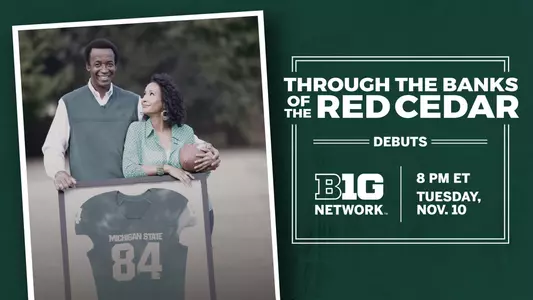
EAST LANSING, Mich. – Big Ten Network will debut "Through the Banks of the Red Cedar" on Tuesday, Nov. 10 at 8 p.m. EST. The Network plans to air the film two more times before the end of 2020.
"Through the Banks of the Red Cedar," from Writer/Director Maya Washington (Running Water Entertainment), is a play on the Michigan State University fight song, that follows the 50-year legacy of the filmmaker's father, legendary Vikings wide receiver Gene Washington (College Football Hall of Fame, Big Ten Ford-Kinnick Leadership Award, Michigan State Athletics Hall of Fame, 50 Greatest Vikings Honoree) from the segregated South to MSU alongside highly decorated teammates Bubba Smith (Defensive Lineman), George Webster (Rover Back) and Clinton Jones (Running Back) as they become members of the first fully integrated football team in America, later making history as first-round picks in the 1967 NFL Draft.
The film unfolds through the eyes of the filmmaker, Maya Washington, Gene's youngest daughter, as she uncovers her father's journey and the impact of this legacy on the present generation. Maya traces her father's footsteps from the segregated South to the North, over the course of a football season. As she uncovers both the triumphs and defeats of her father's team, she develops a newly formed appreciation for the game and a deeper connection to her father, just in time to witness the MSU Spartan Football team ascend to national prominence 50 years later. Learn more at www.redcedarmovie.com.
"Making this film was not only an opportunity to illuminate the struggles that Black athletes in America faced in the '60s, it was also a journey to better appreciate the sacrifices my dad and so many others made for the sport. Anything Black athletes have achieved today is on the shoulders of the early pioneers from my dad's generation and before," said Maya Washington. "The impact that my father and his teammates had at Michigan State, and later with the Vikings, still lives on today."
"The Michigan State football teams of the 1960s brought together individuals from different races to win National Championships. It's something we take for granted today, but it was a groundbreaking strategy that has permanently changed college football," said MSU athletic director Bill Beekman. "We've shown 'Through the Banks of the Red Cedar' to our team and used it to launch important discussions about race, both in sports and beyond. I'd encourage all football fans to watch this important film, not only to learn about our important history and the men who took a risk to change football, but also to spark further thought about race in America today."
The award-winning film has been making its way through the festival circuit, first premiering at the Detroit Free Press Freep Film Festival, and it has been a go-to for universities and scholarly communities since 2018 as a catalyst for intergenerational conversations about race and sports. The Big Ten Network broadcast premiere of this film comes at a time when families in America are looking for ways to think deeply about racial justice and consider how what happened 50 years ago is still relevant today.
"Through the Banks of the Red Cedar," from Writer/Director Maya Washington (Running Water Entertainment), is a play on the Michigan State University fight song, that follows the 50-year legacy of the filmmaker's father, legendary Vikings wide receiver Gene Washington (College Football Hall of Fame, Big Ten Ford-Kinnick Leadership Award, Michigan State Athletics Hall of Fame, 50 Greatest Vikings Honoree) from the segregated South to MSU alongside highly decorated teammates Bubba Smith (Defensive Lineman), George Webster (Rover Back) and Clinton Jones (Running Back) as they become members of the first fully integrated football team in America, later making history as first-round picks in the 1967 NFL Draft.
The film unfolds through the eyes of the filmmaker, Maya Washington, Gene's youngest daughter, as she uncovers her father's journey and the impact of this legacy on the present generation. Maya traces her father's footsteps from the segregated South to the North, over the course of a football season. As she uncovers both the triumphs and defeats of her father's team, she develops a newly formed appreciation for the game and a deeper connection to her father, just in time to witness the MSU Spartan Football team ascend to national prominence 50 years later. Learn more at www.redcedarmovie.com.
"Making this film was not only an opportunity to illuminate the struggles that Black athletes in America faced in the '60s, it was also a journey to better appreciate the sacrifices my dad and so many others made for the sport. Anything Black athletes have achieved today is on the shoulders of the early pioneers from my dad's generation and before," said Maya Washington. "The impact that my father and his teammates had at Michigan State, and later with the Vikings, still lives on today."
"The Michigan State football teams of the 1960s brought together individuals from different races to win National Championships. It's something we take for granted today, but it was a groundbreaking strategy that has permanently changed college football," said MSU athletic director Bill Beekman. "We've shown 'Through the Banks of the Red Cedar' to our team and used it to launch important discussions about race, both in sports and beyond. I'd encourage all football fans to watch this important film, not only to learn about our important history and the men who took a risk to change football, but also to spark further thought about race in America today."
The award-winning film has been making its way through the festival circuit, first premiering at the Detroit Free Press Freep Film Festival, and it has been a go-to for universities and scholarly communities since 2018 as a catalyst for intergenerational conversations about race and sports. The Big Ten Network broadcast premiere of this film comes at a time when families in America are looking for ways to think deeply about racial justice and consider how what happened 50 years ago is still relevant today.


Monday, October 05
Saturday, October 03
Monday, September 28
Saturday, September 26