
Michigan State University Athletics
5/16/2026 7:05:00 PM | Football
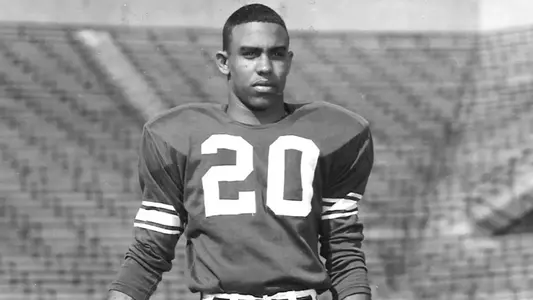
EAST LANSING, Mich. – Michigan State football mourns the passing of former All-American halfback and longtime Spartan assistant coach Sherman Lewis, who passed away on Friday. Lewis was 83 (1942-2026).
Lewis earned consensus first-team All-America honors as a halfback in 1963 while finishing third in the Heisman Trophy voting, equaling the best-ever finish by a Spartan. Following his professional playing career, he returned to Michigan State as an assistant coach under Hall of Famer Duffy Daugherty in 1969, and remained on the Spartan staff as an assistant coach until 1982.
Lewis then headed to the NFL, where he was an assistant coach for the 49ers (1983-91) before serving as the offensive coordinator for the Packers (1992-99), Vikings (2000-01) and Lions (2003-04). He won three Super Bowl rings while on staff for the 49ers, and won his fourth Super Bowl ring as the offensive coordinator for the Packers in the Super Bowl XXXI victory over the Patriots.
A native of Louisville, Kentucky, Lewis was inducted into the Michigan State Athletics Hall of Fame in 2001 and was honored by the Pro Football Hall of Fame as part of the Awards of Excellence Class of 2023. He also was inducted into Kentucky Pro Football Hall of Fame in 2014.
A three-year letterwinner for Daugherty from 1961-63, Lewis earned second-team All-Big Ten honors his first two seasons at MSU before bursting onto the national scene with his All-America campaign as a senior in 1963.
During his first season in 1961, Lewis led the Spartans with 629 all-purpose yards (399 rushing, 117 punt return, 90 receiving, 23 kick return) and ranked second with six touchdowns (five rushing, one receiving). In 1962, Lewis ranked first on the team again with 955 all-purpose yards (590 rushing, 202 kick return, 84 punt return, 79 receiving) and tied for the team lead with nine scores (eight rushing, one receiving). He scored three touchdowns in the 28-0 win over Michigan on Oct. 13 and ran a career-high 138 yards in a 31-7 win at Notre Dame on Oct. 20.
Lewis rushed for 577 yards on 90 carries and was the team's leading receiver with 11 catches for 303 yards (27.5 avg.) during the 1963 season to earn first-team All-America accolades from the Associated Press, United Press, Central Press, Football Writers Association and the New York News, landing a spot on the consensus All-America team. He also garnered first-team All-Big Ten accolades and was voted the team's MVP as he ranked first on the team for a third straight year with a career-high 1,218 all-purpose yards (577 rushing, 303 receiving, 155 kick return, 154 punt return, 29 interception return). The Football News named Lewis its national player of the year, writing that "no other player meant so much to one team as the 153-pounder speedster from Michigan State."
Lewis was on the receiving end of what were then the two longest pass plays in Spartan history in 1963, an 88-yarder vs. Southern California (Oct. 4) and an 87-yard strike vs. Wisconsin (Nov. 2), which still rank No. 3-4 in the record book, respectively. In a win over Northwestern on Oct. 26, he sprinted 87 yards for a touchdown, then the third-longest run in MSU history, and returned four punts for 103 yards, earning him UPI's Midwest Back of the Week honors. He also was named the Associated Press and Sports Illustrated Back of the Week following MSU's 12-7 victory over Notre Dame on Nov. 16 where he scored both touchdowns, including an 85-yard TD run, which still ranks as the 10th-longest run in MSU history. The Spartans went 6-2-1 and finished No. 9 in the final AP Poll.
In the midst of Lewis' All-America season in 1963, Daugherty said "there certainly hasn't been a back anywhere in the country this year that has performed better than Sherm."
Lewis closed out his career No. 5 on the school's career rushing list with 1,566 yards, No. 3 in total touchdowns (23) and third in total points (144). He still ranks fourth all-time at MSU with his 6.21 rushing average (252 carries for 1,566 yards), and his 6.41 rushing average in 1963 is eighth best in a single-season. Following his college career, Lewis earned all-star game invitations to the East-West Shrine Game and the Hula Bowl.
In an article on msuspartans.com on his induction into the MSU Athletics Hall of Fame in 2001, Lewis credited Daugherty for much of his success at Michigan State.
"Duffy was a very serious competitor who taught me how to win," said Lewis. "But he also taught me the other side of life and how we can't take ourselves seriously all the time. He was by far my biggest influence as an athlete at Michigan State."
In the same interview, Lewis talked about his time overall at Michigan State.
"My experiences at Michigan State helped prepare me for a life in athletics," said Lewis. "I learned how to adapt to a big campus and new environment and how to deal with different people from all races and cultures. I also learned how to take that competitive spirit in athletics and apply it to all facets of my life, which has helped me battle through all the ups and downs that I've had to face over the years."
A two-sport star at MSU, Lewis also ran track for the Spartans and won three Big Ten titles (1962 300-yard dash, 1962 long jump, 1963 long jump) while also serving as a captain on the team. He received the athletic department's Chester Brewer Leadership Award in 1964, given annually to a graduating senior in his or her last year of eligibility for distinguished performance in athletics and scholarship and for possessing a high degree of leadership qualities and skill.
Lewis was selected in the ninth round (No. 67 overall) of the 1964 AFL Draft by the New York Jets and the 18th round (No. 250 overall) of the 1964 NFL Draft by Cleveland, but played for Toronto in the CFL before spending two seasons with the New York Jets in 1966-67.
Lewis returned to East Lansing to start his illustrious coaching career as an assistant under Daugherty in 1969 and was on the Spartan staff until 1982, serving under four different head coaches (1969-72 under Daugherty; 1973-75 under Denny Stolz; 1976-79 under Darryl Rogers; 1980-82 under Muddy Waters).
"I knew I wanted to coach," Lewis said in an interview with Jack Ebling for a Black History Month feature on msuspartans.com in 2007. "The people I always looked up to were coaches. They were always the most respected people in the school or the neighborhood. And I knew what it took - being a teacher and being yourself. You can't try to be Rockne or Lombardi."
Hired by the 49ers as a running backs coach by Hall of Famer Bill Walsh beginning with the 1983 season, Lewis played a key role in the 49ers dynasty and won three Super Bowl rings while on staff for San Francisco (XIX, XXIII, XXIV) until 1991. As a running backs coach and then wide receivers coach, Lewis worked directly with Pro Bowl players Roger Craig, Jerry Rice and John Taylor.
He was named the offensive coordinator for Green Bay starting in 1992 under Mike Holmgren and coached in two Super Bowls with the Packers, including winning his fourth Super Bowl ring (XXI over the Patriots). Lewis was the offensive coordinator for Hall of Fame quarterback Brett Favre, who won three consecutive MVP awards (1995-97) in Lewis' offense. Lewis also served as the offensive coordinator for the Vikings (2000-01) and Lions (2003-04). He returned to the NFL as an offensive consultant for Washington in 2009.
Following his coaching retirement in 2004, Lewis broadcasted Michigan State football games during the 2005 season with George Blaha on the Spartan Media Network.
In 2002, Lewis received the Duffy Daugherty Award, given annually to an MSU football alumnus who has distinguished himself in endeavors on and off the field since graduation.
The Pro Football Hall of Fame recognized Lewis in the Awards of Excellence Class of 2023 during a ceremony in Canton on June 28, 2023, capping his prestigious coaching career. The Award of Excellence program honors significant contributors to the game in five categories, including assistant coaches.
Lewis earned consensus first-team All-America honors as a halfback in 1963 while finishing third in the Heisman Trophy voting, equaling the best-ever finish by a Spartan. Following his professional playing career, he returned to Michigan State as an assistant coach under Hall of Famer Duffy Daugherty in 1969, and remained on the Spartan staff as an assistant coach until 1982.
Lewis then headed to the NFL, where he was an assistant coach for the 49ers (1983-91) before serving as the offensive coordinator for the Packers (1992-99), Vikings (2000-01) and Lions (2003-04). He won three Super Bowl rings while on staff for the 49ers, and won his fourth Super Bowl ring as the offensive coordinator for the Packers in the Super Bowl XXXI victory over the Patriots.
A native of Louisville, Kentucky, Lewis was inducted into the Michigan State Athletics Hall of Fame in 2001 and was honored by the Pro Football Hall of Fame as part of the Awards of Excellence Class of 2023. He also was inducted into Kentucky Pro Football Hall of Fame in 2014.
A three-year letterwinner for Daugherty from 1961-63, Lewis earned second-team All-Big Ten honors his first two seasons at MSU before bursting onto the national scene with his All-America campaign as a senior in 1963.
During his first season in 1961, Lewis led the Spartans with 629 all-purpose yards (399 rushing, 117 punt return, 90 receiving, 23 kick return) and ranked second with six touchdowns (five rushing, one receiving). In 1962, Lewis ranked first on the team again with 955 all-purpose yards (590 rushing, 202 kick return, 84 punt return, 79 receiving) and tied for the team lead with nine scores (eight rushing, one receiving). He scored three touchdowns in the 28-0 win over Michigan on Oct. 13 and ran a career-high 138 yards in a 31-7 win at Notre Dame on Oct. 20.
Lewis rushed for 577 yards on 90 carries and was the team's leading receiver with 11 catches for 303 yards (27.5 avg.) during the 1963 season to earn first-team All-America accolades from the Associated Press, United Press, Central Press, Football Writers Association and the New York News, landing a spot on the consensus All-America team. He also garnered first-team All-Big Ten accolades and was voted the team's MVP as he ranked first on the team for a third straight year with a career-high 1,218 all-purpose yards (577 rushing, 303 receiving, 155 kick return, 154 punt return, 29 interception return). The Football News named Lewis its national player of the year, writing that "no other player meant so much to one team as the 153-pounder speedster from Michigan State."
Lewis was on the receiving end of what were then the two longest pass plays in Spartan history in 1963, an 88-yarder vs. Southern California (Oct. 4) and an 87-yard strike vs. Wisconsin (Nov. 2), which still rank No. 3-4 in the record book, respectively. In a win over Northwestern on Oct. 26, he sprinted 87 yards for a touchdown, then the third-longest run in MSU history, and returned four punts for 103 yards, earning him UPI's Midwest Back of the Week honors. He also was named the Associated Press and Sports Illustrated Back of the Week following MSU's 12-7 victory over Notre Dame on Nov. 16 where he scored both touchdowns, including an 85-yard TD run, which still ranks as the 10th-longest run in MSU history. The Spartans went 6-2-1 and finished No. 9 in the final AP Poll.
In the midst of Lewis' All-America season in 1963, Daugherty said "there certainly hasn't been a back anywhere in the country this year that has performed better than Sherm."
Lewis closed out his career No. 5 on the school's career rushing list with 1,566 yards, No. 3 in total touchdowns (23) and third in total points (144). He still ranks fourth all-time at MSU with his 6.21 rushing average (252 carries for 1,566 yards), and his 6.41 rushing average in 1963 is eighth best in a single-season. Following his college career, Lewis earned all-star game invitations to the East-West Shrine Game and the Hula Bowl.
In an article on msuspartans.com on his induction into the MSU Athletics Hall of Fame in 2001, Lewis credited Daugherty for much of his success at Michigan State.
"Duffy was a very serious competitor who taught me how to win," said Lewis. "But he also taught me the other side of life and how we can't take ourselves seriously all the time. He was by far my biggest influence as an athlete at Michigan State."
In the same interview, Lewis talked about his time overall at Michigan State.
"My experiences at Michigan State helped prepare me for a life in athletics," said Lewis. "I learned how to adapt to a big campus and new environment and how to deal with different people from all races and cultures. I also learned how to take that competitive spirit in athletics and apply it to all facets of my life, which has helped me battle through all the ups and downs that I've had to face over the years."
A two-sport star at MSU, Lewis also ran track for the Spartans and won three Big Ten titles (1962 300-yard dash, 1962 long jump, 1963 long jump) while also serving as a captain on the team. He received the athletic department's Chester Brewer Leadership Award in 1964, given annually to a graduating senior in his or her last year of eligibility for distinguished performance in athletics and scholarship and for possessing a high degree of leadership qualities and skill.
Lewis was selected in the ninth round (No. 67 overall) of the 1964 AFL Draft by the New York Jets and the 18th round (No. 250 overall) of the 1964 NFL Draft by Cleveland, but played for Toronto in the CFL before spending two seasons with the New York Jets in 1966-67.
Lewis returned to East Lansing to start his illustrious coaching career as an assistant under Daugherty in 1969 and was on the Spartan staff until 1982, serving under four different head coaches (1969-72 under Daugherty; 1973-75 under Denny Stolz; 1976-79 under Darryl Rogers; 1980-82 under Muddy Waters).
"I knew I wanted to coach," Lewis said in an interview with Jack Ebling for a Black History Month feature on msuspartans.com in 2007. "The people I always looked up to were coaches. They were always the most respected people in the school or the neighborhood. And I knew what it took - being a teacher and being yourself. You can't try to be Rockne or Lombardi."
Hired by the 49ers as a running backs coach by Hall of Famer Bill Walsh beginning with the 1983 season, Lewis played a key role in the 49ers dynasty and won three Super Bowl rings while on staff for San Francisco (XIX, XXIII, XXIV) until 1991. As a running backs coach and then wide receivers coach, Lewis worked directly with Pro Bowl players Roger Craig, Jerry Rice and John Taylor.
He was named the offensive coordinator for Green Bay starting in 1992 under Mike Holmgren and coached in two Super Bowls with the Packers, including winning his fourth Super Bowl ring (XXI over the Patriots). Lewis was the offensive coordinator for Hall of Fame quarterback Brett Favre, who won three consecutive MVP awards (1995-97) in Lewis' offense. Lewis also served as the offensive coordinator for the Vikings (2000-01) and Lions (2003-04). He returned to the NFL as an offensive consultant for Washington in 2009.
Following his coaching retirement in 2004, Lewis broadcasted Michigan State football games during the 2005 season with George Blaha on the Spartan Media Network.
In 2002, Lewis received the Duffy Daugherty Award, given annually to an MSU football alumnus who has distinguished himself in endeavors on and off the field since graduation.
The Pro Football Hall of Fame recognized Lewis in the Awards of Excellence Class of 2023 during a ceremony in Canton on June 28, 2023, capping his prestigious coaching career. The Award of Excellence program honors significant contributors to the game in five categories, including assistant coaches.


Monday, October 19
Saturday, October 17
Monday, October 12
Saturday, October 10